
10 Best Packaging Paper Suppliers for Global Buyers
Choosing the right packaging paper supplier is rarely a simple price comparison. Global buyers must examine fiber quality, coating performance, printing consistency, delivery capacity, and sustainability evidence. A sample may look excellent under showroom lights, yet fail during humid storage or long-distance shipping. Small details matter.
Lars Wallentin, former head of packaging design at Nestlé, is widely credited with saying, “Packaging is the silent salesman.” His observation remains relevant because packaging paper protects products while communicating quality at the point of purchase. Reliable suppliers understand both roles. They control moisture, surface smoothness, strength, and color stability across repeated production runs.
This guide reviews 10 best packaging paper suppliers for global buyers. The comparison considers product range, manufacturing experience, certifications, export support, customization, and technical responsiveness. It also examines practical concerns, such as minimum order quantities, lead times, pallet protection, and communication across time zones. These factors can shape the real purchasing cost.
No ranking is flawless. Supplier performance can change by region, material grade, and order volume. A famous manufacturer may not suit a smaller buyer. A competitive quotation may exclude testing or special coating requirements. Buyers should request current technical datasheets, recent samples, and clear compliance documents before signing contracts.
The strongest choice is not always the cheapest one. It is the supplier that delivers stable packaging paper when conditions become difficult.

Packaging Paper Types and Their Common Global Applications
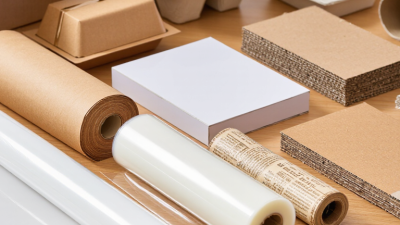
Packaging paper serves different jobs across global supply chains. Kraft paper is strong, flexible, and widely used for bags, wrapping, and protective layers. Corrugated medium forms the fluted center of shipping boxes. It absorbs impact during long-distance transport.
Folding boxboard supports retail cartons for food, household goods, and personal care products. Its smooth surface accepts clear printing and sharp folding lines. Food-contact applications may require suitable barriers against moisture, oil, or odor. Grease-resistant paper works well for bakery wraps, takeaway liners, and snack packaging. Not every coated paper suits direct contact, however.
Recycled paper reduces demand for fresh fiber and can support circular packaging systems. Its shade and strength may vary between batches. Buyers should check fiber content, basis weight, moisture tolerance, and compression performance before placing large orders. Small sample tests reveal weaknesses that product sheets can hide. In warehouse checks, uneven edges and excess dust often signal weak converting control. That detail matters.
Tissue and lightweight wrapping paper protect glassware, clothing, and delicate surfaces without adding much shipping weight. Water-resistant paper can serve produce sleeves or chilled goods, but performance depends on temperature and exposure time. Global buyers should also review export packing, pallet stability, humidity protection, and traceable quality records. A lower price may become expensive after crushed corners, print defects, or rejected shipments.
| Rank | Anonymous Supplier Profile | Typical Supply Region | Core Packaging Paper Types | Typical Basis Weight | Common Global Applications | Typical Technical Strengths | Common Buyer Requirements and Certifications |
|---|---|---|---|---|---|---|---|
| 1 | Integrated virgin-fiber kraft paper mill | Northern and Western Europe | Kraftliner Sack kraft paper MG kraft paper | 70–200 g/m² | Heavy-duty corrugated boxes, industrial sacks, building-material bags, export packaging and pallet stabilization. | High tensile strength, good tear resistance, reliable machine runnability and consistent moisture performance. | FSC or PEFC chain of custody, ISO 9001, ISO 14001, food-contact compliance where applicable and recyclable-paper declarations. |
| 2 | Recycled containerboard producer | Central Europe and the United Kingdom | Testliner Fluting paper Recycled kraft substitutes | 80–180 g/m² | Secondary corrugated cartons, e-commerce mailers, retail cases, transport packaging and shelf-ready packaging. | High recycled content, competitive cost, good printability and suitable compression performance for standard shipping cartons. | Recycled-content verification, ISO 9001, ISO 14001, EN 643 recovered-paper sourcing controls and packaging-recycling compliance. |
| 3 | Asian kraft and corrugating-paper exporter | East and Southeast Asia | Kraftliner Testliner Fluting | 70–250 g/m² | Consumer-goods cartons, electronics packaging, food delivery boxes, furniture cartons and export-oriented corrugated packaging. | Broad grade selection, large-volume production, flexible sheet or reel formats and strong availability for containerized shipments. | ISO 9001, ISO 14001, FSC or PEFC options, food-packaging declarations and buyer-specific chemical restrictions. |
| 4 | North American packaging-board supplier | United States and Canada | Linerboard Corrugating medium Coated folding-board grades | 90–350 g/m² | Retail cartons, beverage cases, warehouse shipping boxes, frozen-food packaging and branded secondary packaging. | High stiffness, dependable converting performance, broad roll widths and strong supply-chain support for large-volume buyers. | Sustainable-fiber sourcing, SFI or FSC options, FDA or equivalent food-contact compliance, ISO 9001 and recycled-content documentation. |
| 5 | Specialty sack-paper manufacturer | Europe, Latin America and selected Asian markets | Extensible sack kraft High-porosity kraft Multiwall-bag paper | 60–110 g/m² per ply | Cement bags, flour and grain sacks, chemical bags, animal-feed packaging and powdered-food multiwall bags. | High elongation, excellent burst strength, controlled air permeability and strong resistance to filling-line stress. | FSC or PEFC options, food-contact declarations, ISO 9001, ISO 14001 and testing for migration or odor when required. |
| 6 | Flexible-packaging paper converter | Western Europe and Southeast Asia | Grease-resistant paper Barrier paper Heat-sealable paper | 35–120 g/m² | Bakery bags, quick-service food wraps, snack pouches, sachets, pet-food packaging and paper-based shipping envelopes. | Oil and grease resistance, printability, heat-sealing capability and compatibility with paper recycling streams when designed appropriately. | Food-contact compliance, PFAS-free declarations where required, recyclability assessment, FSC or PEFC and ink or coating compliance. |
| 7 | Molded-fiber and bag-stock paper supplier | China, India and Southeast Asia | Bag kraft paper Wrapping paper Forming-grade paper | 40–140 g/m² | Retail shopping bags, takeaway bags, produce bags, protective wrapping and paper components for molded-fiber packaging. | Good folding endurance, surface smoothness, print performance and compatibility with flexographic and offset printing. | FSC or PEFC options, ISO 9001, food-contact documentation, recycled-content declarations and heavy-metal or restricted-substance testing. |
| 8 | Cups and liquid-packaging paperboard supplier | Europe, the Americas and East Asia | Cupstock board Food-service board Coated paperboard | 170–400 g/m² | Hot-drink cups, cold-drink cups, takeaway containers, ice-cream tubs and food-service cartons. | Stable stiffness, clean die-cutting, resistance to liquid penetration and compatibility with dispersion or polymer coatings. | Food-contact compliance, coating composition disclosure, responsible-fiber certification, recyclability guidance and ISO 9001. |
| 9 | Decorative and retail-paper supplier | Italy, Germany, Turkey and selected Asian markets | Colored kraft paper Clay-coated paper Gift-wrap paper | 60–250 g/m² | Luxury retail bags, cosmetics packaging, apparel boxes, gift wrap, greeting-card packaging and premium product presentation. | High-quality surface finish, color consistency, smoothness, foldability and suitability for offset, flexographic or digital printing. | FSC or PEFC, ISO 9001, azo-dye and heavy-metal controls, REACH-related declarations and recycled-content options. |
| 10 | Agricultural and industrial wrapping-paper supplier | Latin America, Scandinavia and selected Asian markets | Wet-strength paper Wax or coating base paper Industrial wrapping kraft | 45–180 g/m² | Seed bags, horticultural packaging, meat and fish interleaving, metal-component wrapping and moisture-sensitive industrial goods. | Wet strength, puncture resistance, dimensional stability and protection against moisture, dust or surface abrasion. | FSC or PEFC options, food-contact compliance when relevant, ISO 9001, coating disclosure and transport-performance testing. |
Related Posts
-
10 Best Packaging Paper Types for Global Buyers?
-

What Is the Best Packaging Paper From China?
-

How to Choose the Right Packaging Paper for Your Needs?
-

Top Types of Packaging Paper for Eco Friendly Shipping Solutions?
-
China Top Packaging Paper Suppliers for Global Buyers
-

2026 Top Packing Paper Types for Global Buyers?