10 Best Packaging Paper Types for Global Buyers?
Global buyers are reassessing packaging materials as freight costs, climate targets, and retailer requirements continue to change. Packaging paper now sits at the center of that discussion. It can be lightweight, printable, recyclable, and widely available. Yet no grade solves every supply-chain problem.
FAO forestry statistics recorded roughly 420 million tonnes of global paper and paperboard production in 2022. Smithers’ The Future of Paper-Based Packaging to 2028 also identifies continued growth in paper-based formats, supported by e-commerce, food delivery, and plastic-reduction initiatives. These figures show market momentum. They do not guarantee performance. A paper bag that survives a dry retail shelf may fail beside a refrigerator. Moisture, grease, stacking pressure, printing, and barrier coatings all matter.
Dame Ellen MacArthur, a leading circular-economy expert, has said, “We need to eliminate the things we don’t need.” That principle should guide every packaging paper purchase. Buyers should compare fiber source, recycled content, basis weight, coating design, certification, and end-of-life options. Cost alone can create expensive surprises. A cheaper roll may bring higher breakage, slower packing lines, or difficult recycling.
This guide examines ten packaging paper types for global buyers. It focuses on practical selection rather than fashionable claims. The shortlist is not perfect. Regional recycling systems differ. Supplier data also needs verification. Still, these materials provide a useful starting point for responsible, informed decisions across retail, food, industrial, and e-commerce applications.
What Is Packaging Paper and Why Does Type Selection Matter?
Packaging paper is paper-based material designed to protect, contain, wrap, or present products during storage and transport.
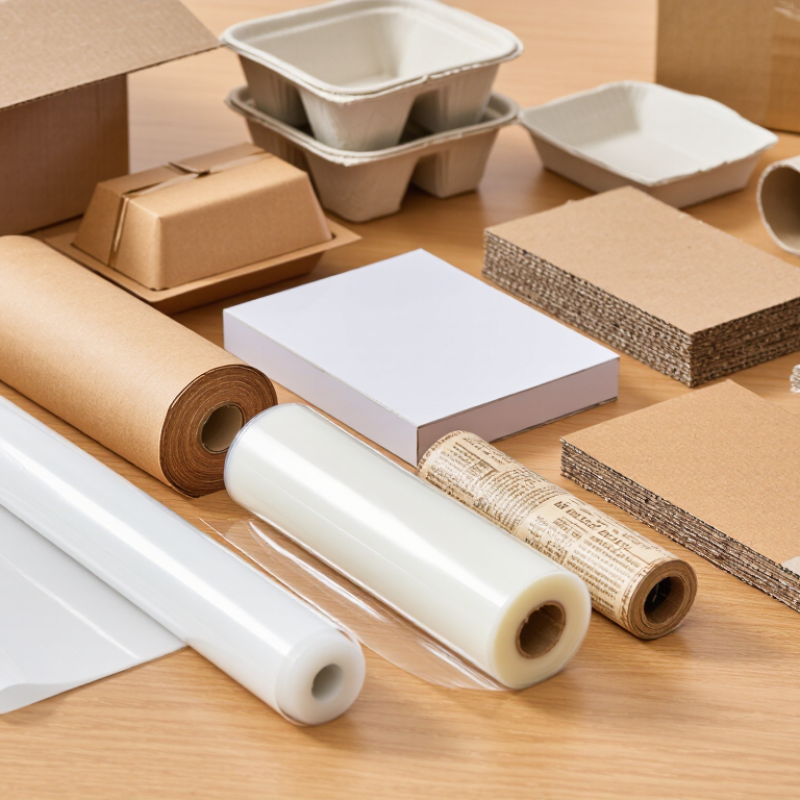
Common types include kraft paper, corrugated linerboard, sack paper, coated paper, and grease-resistant grades. Each combines different fibers, coatings, weights, and moisture barriers.
Scale matters. The FAO Forestry Production and Trade database reports global paper and paperboard production above 400 million tonnes annually in recent years. Packaging uses a major share of this output. Smithers’ market studies also identify fiber-based packaging as a continuing growth area, driven by recycling targets and reduced plastic use. These figures do not make every paper option sustainable. They show why specifications need evidence.
Type selection affects product safety, shipping cost, printing quality, and recyclability. Kraft paper suits shopping bags and outer wraps because it offers useful strength. Corrugated paper protects boxes through stacking and vibration. Coated grades improve print detail, but coatings may complicate recycling. Grease-resistant paper helps with oily foods. Moisture can still weaken it.
In warehouse trials, a heavier grade sometimes performed worse because poor folding created open corners. That result is easy to miss.
Global buyers should check basis weight, burst strength, Cobb value, recycled content, food-contact suitability, and test conditions. Ask for laboratory reports, not only supplier claims. Also test the paper after humidity exposure. Real shipments are rarely dry, clean, or perfectly handled. A neat specification can still fail in a wet container. Even professional selections need review when climate, filling equipment, or transport routes change.
How to Classify Packaging Paper by Material, Strength, and Use
Packaging paper should be classified by material before comparing suppliers.
Kraftliner uses long-fiber pulp and offers high tensile strength for corrugated boxes. Testliner contains more recycled fiber and usually costs less. Fluting paper forms the corrugated middle layer, where compression resistance matters. Folding boxboard provides a smooth surface for cartons, while sack paper is engineered for repeated bending and filling stress. Greaseproof and coated papers suit food-contact applications, but barrier performance must be verified for each use.
Strength requires more than a high GSM number.
Buyers should review burst strength, edge crush test, short-span compression, tensile strength, and Cobb water absorption.
A 125–180 gsm fluting grade may perform well in dry conditions, yet fail after humidity exposure.
The Confederation of European Paper Industries reported European paper and board production at about 82 million tonnes in 2023, showing the scale of a highly varied supply base. Product names alone are not reliable enough.
Use conditions complete the classification.
Heavy export cartons need strong liners and moisture control. Retail cartons often prioritize stiffness, printability, and surface smoothness. Paper sacks need tear resistance and controlled porosity.
According to FAOSTAT forestry data, global paper and paperboard production exceeded 400 million tonnes in recent years, but regional fiber mixes differ greatly. That makes direct comparisons imperfect.
I have seen buyers focus on price first, then discover that stacking height, warehouse humidity, or filling speed changes the required grade. A laboratory sample is useful, but real distribution testing is better. Packaging decisions should remain evidence-based, not catalogue-based.
How to Choose Packaging Paper for Different Products and Markets
10 Best Packaging Paper Types for Global Buyers
Choosing packaging paper starts with the product, not the catalog. A heavy glass jar needs strong kraft paper or corrugated board with reliable compression strength. Fresh bakery items often need greaseproof or glassine paper to resist oil without feeling bulky. For dry goods, uncoated kraft paper can provide a natural texture and practical print surface. Coated paper gives sharper graphics, but it may complicate recycling in some markets. Thin tissue paper suits wrapping, while laminated paper can improve moisture resistance for selected applications.
Market conditions matter just as much. Humid shipping routes may soften ordinary paper, especially when cartons sit near open docks. Cold-chain products need paper that tolerates condensation, not only low temperatures. Buyers should check fiber content, coating structure, recycled content, and food-contact documentation before approving samples. Local recycling systems also deserve attention. A paper package that looks recyclable may not be accepted where plastic layers are difficult to separate.
Test it physically.
During trials, fill the package with the real product and stack it for several days. Measure tearing, odor transfer, print rubbing, and closure performance. I once underestimated humidity and approved paper that looked strong in a dry warehouse. It failed after overseas storage. That mistake still influences my specifications. Paper weight alone is not proof of performance. Suppliers should provide consistent test data, but buyers should repeat key checks independently. Costs, appearance, protection, and end-of-life options rarely align perfectly. One choice usually needs compromise.
10 Packaging Paper Types for Global Buyers
Typical basis weight midpoints by paper type, with common packaging applications
Basis weight is a practical starting point when comparing packaging papers. Lightweight greaseproof and glassine papers are commonly used for wrapping and food-contact applications, while kraft, sack kraft, linerboard, and corrugating medium are suited to bags and transport packaging. Folding boxboard, SBS, and coated duplex board provide higher stiffness and printability for cartons and retail packs. Actual specifications should be confirmed according to product protection, converting equipment, moisture exposure, food-contact requirements, recycling targets, and destination-market regulations.