How to Choose the Best Stretch Film for Your Packaging Needs?
Choosing the right stretch film for your packaging needs can be challenging. With many options available, it is crucial to understand the nuances of each type. Stretch film varies in thickness, elasticity, and sheer strength. These characteristics significantly influence performance and cost.
When selecting stretch film, consider your specific requirements. Factors like product type, shipping distance, and storage conditions matter. A thicker film can offer better protection but may increase costs. On the other hand, a thinner film may not provide adequate security for fragile items. Also, consider environmental impact. Some films are more eco-friendly than others.
Reflecting on these details is essential. Have you evaluated your packaging process thoroughly? Sometimes, businesses overlook the need for the right film. Investing time in this decision can lead to better efficiency and savings. Choose wisely to ensure your products arrive safely.

Understanding the Different Types of Stretch Films in the Market
When it comes to packaging, selecting the right stretch film is crucial. Various types of stretch films serve different purposes. Some are designed for pallet wrapping, while others excel in bundling products. Awareness of these differences helps in making informed choices.
Monolayer films offer basic protection and are cost-effective. They work well in lightweight applications. However, they may lack durability under extreme conditions. Polyethylene films are another option, providing superior strength and puncture resistance. They are ideal for heavy loads. But, they may result in higher costs.
Consider the thickness and elasticity of the films. Different gauges indicate the strength and stretchability. This can dramatically affect the performance during shipping. Additionally, clarity plays a role. A transparent film allows easy identification of contents, which is helpful in various industries. Assessing the requirements for your packaging will clarify the best choice. Decisions should reflect both needs and budget constraints.
How to Choose the Best Stretch Film for Your Packaging Needs? - Understanding the Different Types of Stretch Films in the Market
| Type of Stretch Film |
Material |
Thickness (microns) |
Tensile Strength (MPa) |
Elongation (%) |
Ideal Usage |
| Cast Stretch Film |
LLDPE |
15-25 |
20-25 |
300-600 |
Pallet wrapping, unitizing |
| Blown Stretch Film |
LLDPE |
20-35 |
15-20 |
200-400 |
Heavy-duty applications |
| Pre-Stretched Film |
LLDPE |
10-15 |
30-35 |
200-300 |
Efficiency in packaging |
| UV-Resistant Stretch Film |
LLDPE |
15-25 |
20-25 |
300-600 |
Outdoor storage |
| Colored Stretch Film |
LLDPE |
15-25 |
20-25 |
300-600 |
Inventory control, security |
Key Factors to Consider When Selecting Stretch Film for Packaging
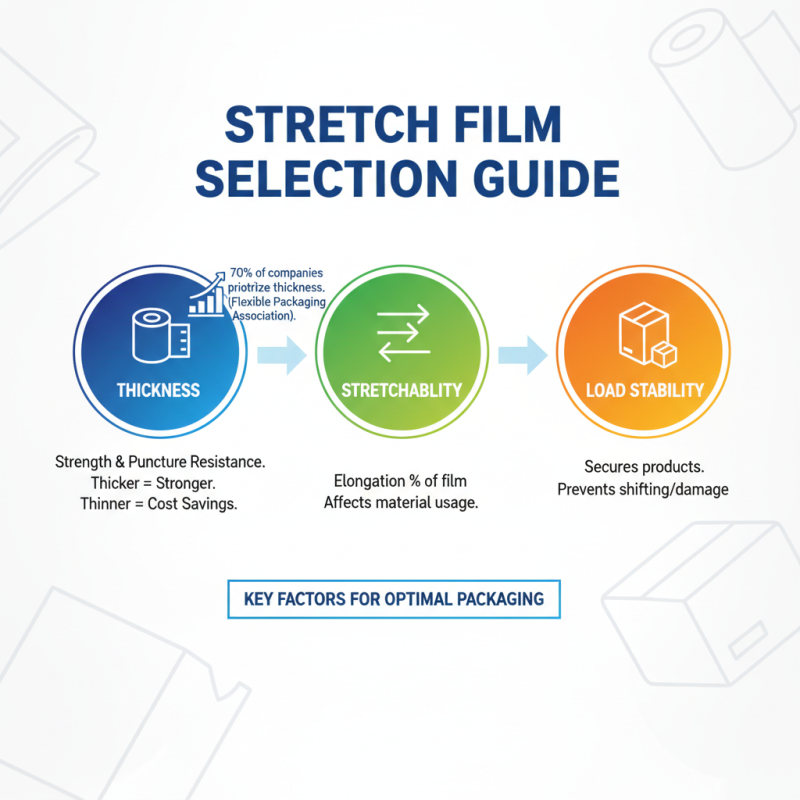
When selecting stretch film for packaging, several key factors must be considered. The thickness of the film is crucial. Generally, thicker films provide better strength and puncture resistance. Thinner films, on the other hand, can reduce material costs and improve stretchability. According to a recent report from the Flexible Packaging Association, 70% of companies prioritize stretch film thickness in their purchasing decisions.
Another critical element is the type of stretch film. Pre-stretched films and machine-grade films serve different purposes. Using the right type ensures efficiency in packaging operations. A study by Smithers Pira indicates that machine-stretch films can increase productivity by up to 25%. However, they might not be suitable for all applications. This decision can lead to longer packing times or increased damaged goods.
Additionally, clarity and visibility play an important role. Packaging must allow for easy product identification. Transparent stretch films support visibility but might compromise security. Research shows that 40% of consumers prefer products that are easily identifiable through their packaging. Beyond these factors, considering environmental impact is becoming essential. Many producers now seek recyclable options. This not only fulfills consumer demands but also aligns with sustainability goals in packaging. Balancing these elements requires careful thought and assessment of your specific needs.
How Film Thickness Impacts Load Stability and Cost Efficiency
Choosing the right stretch film for packaging can be challenging. One critical aspect is the thickness of the film used. Thicker films often provide better load stability. According to a recent industry report, films ranging from 60 to 80 gauge tend to offer optimal support for heavy loads without excessive vulnerability.
Cost efficiency is another vital consideration. Thicker films generally cost more per roll. However, they reduce the chances of damage during transportation. This can save companies significant costs related to product loss and replacements. A study found that businesses using thinner films experienced up to 20% more product damage.
A reflection on packaging practices reveals that companies often overlook the importance of thickness. Many default to thinner films to save upfront costs. Yet, this choice can lead to unexpected expenses in the long run. Understanding the balance between cost and load stability is necessary for making informed decisions.
Evaluating Adhesion Properties and Their Role in Packaging Performance
Adhesion properties are crucial in determining the effectiveness of stretch film in packaging. These properties refer to how well the film sticks to itself and the surface of the products. A strong adhesion can prevent slippage, ensuring that items remain securely bundled during transport. However, the right level of adhesion can vary depending on the specific elements of your packaging requirements.
In some cases, too much adhesion can lead to difficulties during unpacking. A film that clings excessively to items might cause damage or leave residues. Conversely, insufficient adhesion may result in load instability, increasing the risk of breakage. Therefore, it's essential to evaluate the balance of adhesion when selecting a stretch film. Testing different types of film in real-world scenarios can provide valuable insights. Observing performance under various conditions, such as temperature and humidity, can reveal how films behave in practical applications.
Understanding these subtleties can significantly impact overall packaging performance. Recognizing the role of adhesion helps in making informed decisions, which is key to optimizing efficiency. Regular assessments and adjustments can enhance effectiveness and reflect a continuous improvement mindset. This focus on practical evaluation ensures that packaging solutions evolve alongside changing demands.
Adhesion Properties of Different Stretch Films
Sustainability Trends: Choosing Eco-Friendly Stretch Film Options
In recent years, sustainability has become a priority in packaging. Eco-friendly stretch films are gaining traction among businesses aiming for greener solutions. These products often use recycled materials, minimizing waste. They are designed to be biodegradable, breaking down more efficiently than traditional films. It’s refreshing to see how these options align with environmental goals.
However, selecting the right stretch film requires careful thought. Not all eco-friendly options perform equally. Some may not provide the same level of durability or tensile strength. Companies should assess their packaging requirements alongside environmental impact. Understanding the product’s lifecycle is crucial. Does it truly benefit the environment? Sometimes, the greenest choice demands further investigation.
Ultimately, the path to sustainability in packaging is still evolving. There are challenges to overcome, and some eco-friendly films may have limitations. Adopting these alternatives can involve trial and error. It’s essential to remain vigilant about what is marketed as green. A careful selection process will ensure that the chosen stretch film serves both environmental goals and practical needs.