Industrial packaging supplies protect goods during manufacturing, storage, handling, and transportation. They include pallets, corrugated cartons, stretch film, strapping, edge protectors, drums, crates, and protective foams. Each item serves a practical purpose. A pallet lifts products safely with a forklift. Stretch film stabilizes stacked cartons. Strapping prevents movement during long-distance delivery. Strong corrugated packaging can reduce crushing, moisture exposure, and costly product damage.
Walter Soroka, a respected packaging educator and author, describes packaging as “the science, art, and technology of enclosing and protecting products for distribution, storage, sale, and use.” His definition highlights the wider role of industrial packaging supplies. They are not merely containers. They support warehouse efficiency, inventory control, worker safety, and consistent product presentation. In my experience, the best packaging system begins with the product’s weight, shape, fragility, and travel conditions. A glass component needs different protection than a steel fitting.
The details matter.
A poorly chosen film may tear around sharp corners. An oversized crate may waste warehouse space and increase freight costs. Moisture-sensitive products may require barrier materials and desiccants. However, no packaging solution is perfect. More material can improve protection, yet it may increase waste and handling effort. Reusable systems can reduce replacement costs, but they need reliable return logistics. This article examines what industrial packaging supplies are used for and how businesses can choose them responsibly. The goal is practical guidance, not a one-size-fits-all answer. Real performance should be checked through shipment records, damage rates, storage conditions, and worker feedback.
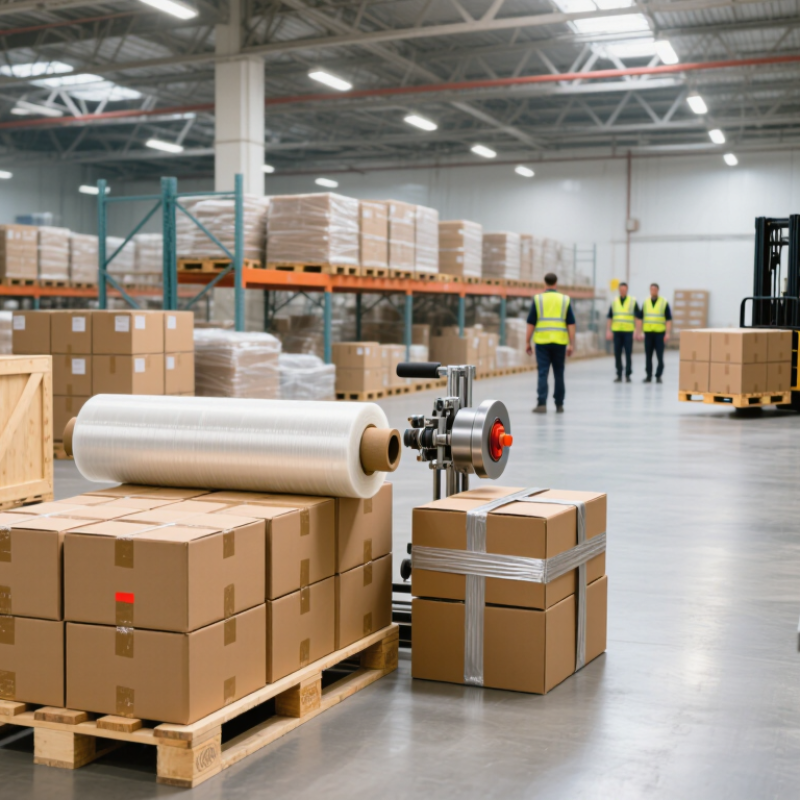
Industrial packaging supplies are the materials used to protect, secure, identify, and move products through warehouses and transport networks. Common supplies include corrugated cartons, wooden pallets, stretch film, strapping, edge protectors, cushioning pads, and moisture-absorbing packets. Each material serves a different purpose. A carton contains the product, while stretch film holds several cartons together on one pallet.
Some products need stronger protection. Heavy machinery may require reinforced boxes, blocking, and bracing to prevent movement. Fragile components often need foam inserts, molded pulp, or air cushions around sensitive surfaces. Labels also matter. Handling marks, product codes, weight details, and shipping instructions help workers identify packages quickly. Clear information reduces avoidable mistakes.
Small details can change the result.
In warehouse operations, packaging choices should match product weight, shape, storage time, and transport conditions. Thin film may save material, but it can fail around sharp corners. Oversized cartons may increase damage because products move inside them. I have seen teams overuse cushioning when a simple internal divider would work better. That approach feels safe, yet it can raise costs and create unnecessary waste. Testing a packed unit with vibration, stacking, and drop checks gives more reliable evidence than appearance alone. Packaging plans should also be reviewed when product dimensions or shipping routes change.
Industrial packaging supplies support many industries that move, store, or protect physical products. Manufacturing plants use stretch film, strapping, edge protectors, pallets, and heavy-duty cartons for machinery and components. These materials reduce shifting during transport and help prevent surface damage. In automotive production, custom crates and foam inserts protect painted panels, engines, and delicate parts. A loose part can create expensive delays.
The food and beverage industry needs packaging that supports hygiene, traceability, and temperature control. Corrugated cases, sealed liners, insulated containers, and absorbent pads are common choices. Packaging must also withstand cold rooms, condensation, and repeated handling. Pharmaceutical operations require even tighter control. They may use tamper-evident seals, insulated shippers, protective cushioning, and clear labeling for sensitive products. Small packaging errors can affect product quality.
E-commerce warehouses rely on cartons, void fill, mailers, labels, and pallet wrap every day. Electronics companies often add anti-static bags and molded protection for circuit boards and devices. Agriculture uses ventilated crates, produce cartons, and moisture-resistant materials during seasonal shipping. Construction suppliers need strong packaging for tools, fixtures, panels, and hardware. No packaging plan is perfect. A material that works in a dry warehouse may fail in humid transit. Regular checks, practical testing, and feedback from drivers and warehouse staff often reveal problems that specifications miss.
What Are Industrial Packaging Supplies Used For?
How Industrial Packaging Supplies Protect and Contain Products
Industrial packaging supplies protect products during storage, handling, and transport. They also keep items grouped, stable, and easier to inspect. In a warehouse, a strong carton can resist stacking pressure from several layers above. Stretch film can hold cartons tightly on a pallet. Edge protectors reduce crushing around corners. Small details matter.
Moisture barriers, liners, and desiccant packs help shield sensitive goods from humidity and dust. Foam inserts absorb vibration around machined parts, glass components, or uneven surfaces. Strapping adds tension when loads might shift during forklift movement. Packaging specialists select materials according to product weight, shape, fragility, temperature, and travel distance. They may conduct drop tests, compression tests, and vibration trials before approving a packing method. Real handling conditions often reveal weaknesses that laboratory tests miss.
Containment is equally important. A fitted inner pack prevents movement, while a sealed outer case keeps components together during opening. Clear labels and consistent dimensions also support safer warehouse work. Still, no packaging design is perfect. An over-tight strap can deform a product, while excessive film creates unnecessary waste and may hide damage. Teams should inspect crushed corners, loose seals, and moisture marks regularly. Sometimes, the simplest improvement is better training.
Industrial packaging supplies help contain products and protect them from impact during handling and transport. The chart shows the minimum drop-test heights used for UN performance packaging according to the product’s packing group: higher-risk materials require packaging tested from greater heights.
Source: United Nations Recommendations on the Transport of Dangerous Goods, Model Regulations, Section 6.1.5.3.
Industrial packaging supplies protect products during storage, handling, and transport. They may include cartons, pallets, stretch film, edge protectors, cushioning, strapping, and moisture barriers. A heavy machine part needs stronger support than a lightweight plastic component. Sensitive goods may require shock absorption, dust control, or stable temperature conditions.
How Businesses Select the Right Packaging Supplies
Selection begins with the product, not the packaging catalog. Teams should measure weight, dimensions, surface sensitivity, and stacking limits. They also need to study the shipping route. A package moving across humid warehouses faces different risks from one handled in a dry facility. Forklift access, loading speed, storage space, and worker safety also influence the decision.
Ask practical questions. Will the package resist crushing? Can workers open it without damaging the product? Does it fit standard pallets? For fragile equipment, molded cushioning may reduce movement inside the container. For dense components, reinforced corners and stronger strapping can prevent collapse. Weight matters. Excess packaging raises labor, storage, and transport costs.
Testing should happen under realistic conditions. Teams can conduct drop checks, compression tests, vibration trials, and moisture inspections. No selection is perfect. A package may survive transport but waste too much space. Another may reduce material use but slow warehouse handling. Businesses should record these weaknesses, compare total costs, and revise the design after real shipment feedback. Reliable suppliers should provide clear specifications, consistent quality, and practical technical support.
| Packaging Supply | Typical Industrial Use | Primary Protection Provided | Key Selection Dimensions | Operational Considerations | Common Sustainability Considerations |
|---|---|---|---|---|---|
| Corrugated Boxes | Shipping components, finished goods, spare parts, and retail-ready products through distribution networks. | Protection against compression, abrasion, handling impacts, and stacking pressure. | Box dimensions, flute profile, board strength, product weight, stacking height, and shipping environment. | Easy to label, fold, seal, palletize, and recycle. Box size should closely match the product to reduce void space. | Corrugated fiberboard is widely recyclable where collection and recycling infrastructure is available. Recycled content and right-sizing can reduce material use. |
| Pallets | Supporting and consolidating goods for storage, forklift handling, and transportation. | Load support, separation from floors, and efficient mechanical handling. | Static and dynamic load capacity, pallet dimensions, rack compatibility, entry configuration, hygiene requirements, and reuse cycles. | Unit loads should be stable and evenly distributed. Compatibility with forklifts, pallet jacks, racks, and containers is essential. | Reusable pallets may reduce single-use material demand. Wood, plastic, and composite options should be assessed by service life, repairability, and end-of-life options. |
| Stretch Film | Securing cartons and products to pallets during storage and transport. | Load containment, dust protection, moisture resistance, and resistance to shifting. | Film thickness, stretch performance, puncture resistance, load weight, application method, and required containment force. | Too little film can cause unstable loads, while excessive film increases cost and material consumption. Application settings should be tested for each load type. | Film reduction through optimized pre-stretch and controlled application can lower material usage. Recyclability depends on local collection systems and material composition. |
| Strapping | Bundling pipes, lumber, metal products, cartons, and palletized loads. | High tensile restraint and resistance to load movement during handling. | Strap material, tensile strength, elongation, seal or buckle compatibility, edge protection, and tension requirements. | Proper tension prevents movement without crushing the product. Sharp edges may require corner or edge protectors. | Material selection should consider recycled content, reusability where practical, and separation from other packaging materials during recycling. |
| Wooden Crates and Cases | Protecting heavy, large, irregularly shaped, or high-value machinery and industrial equipment. | Impact resistance, rigidity, vibration reduction, and protection from handling hazards. | Product weight, center of gravity, lifting points, internal blocking, moisture exposure, transport mode, and crate strength. | Internal bracing and blocking must prevent movement. Export shipments may require treated wood packaging that meets applicable import regulations. | Reusable designs, repairable components, responsibly sourced wood, and efficient disassembly can improve lifecycle performance. |
| Protective Foams | Cushioning electronics, instruments, machinery parts, glass, and precision components inside outer packaging. | Shock absorption, vibration isolation, surface protection, and separation between parts. | Product fragility, drop height, vibration exposure, foam density, compression behavior, temperature range, and fit. | The cushion must be designed for the product weight and expected handling conditions. Excessive compression can reduce protective performance. | Material reduction, reusable inserts, and recyclable or returnable systems may reduce waste, subject to product protection requirements. |
| Edge Protectors | Reinforcing palletized cartons and protecting product edges under straps or stretch film. | Prevention of crushing, strap damage, corner impact, and load deformation. | Leg length, thickness, compression strength, moisture exposure, load weight, and compatibility with strapping. | They improve load stability and distribute strap pressure across a larger surface area. | Fiber-based protectors may be recyclable when free of incompatible coatings and contaminants. Correct sizing reduces unnecessary material use. |
| Desiccants and Moisture Barriers | Protecting metal parts, electronics, tools, and other moisture-sensitive products during enclosed or overseas transport. | Control of humidity, condensation, corrosion, and moisture-related product damage. | Product sensitivity, package volume, transport duration, climate, barrier performance, and required humidity level. | Moisture-control systems work best when the product is sealed correctly and the package design limits moisture ingress. | Use the minimum effective quantity and follow applicable handling and disposal requirements for the selected moisture-control material. |
| Bulk Bags and Flexible Intermediate Bulk Containers | Handling and transporting dry powders, granules, agricultural materials, minerals, and other bulk solids. | Containment, dust reduction, efficient filling, discharge, and lifting of bulk materials. | Safe working load, material compatibility, filling and discharge design, liner requirements, lifting configuration, and reuse policy. | Load limits and handling instructions must be followed. The bag design should match the flow characteristics and hazard profile of the contents. | Reusable systems can reduce packaging waste when cleaning, inspection, and product-contamination controls are feasible. |
| Labels and Marking Supplies | Identifying contents, handling requirements, shipment information, inventory data, and traceability details. | Information protection through clear identification and handling communication rather than physical cushioning. | Adhesive performance, surface type, print durability, barcode readability, temperature range, moisture exposure, and regulatory information. | Labels should remain legible throughout storage and transport. Placement must not cover required warnings, lifting points, or product information. | Using appropriately sized labels and reducing unnecessary layers can lower material consumption while preserving traceability. |
What Is Industrial Packaging Supplies Used For?
How Industrial Packaging Supplies Support Storage and Transportation
Industrial packaging supplies protect goods during stacking, storage, and movement. Common materials include pallets, stretch film, corrugated cases, edge protectors, straps, and moisture barriers. Each item controls a different risk. Cushioning reduces shock. Film limits dust and shifting. Desiccants help manage humidity inside sealed loads.
Damage starts quietly.
In warehouses, packaging creates stable unit loads. A square pallet pattern improves stacking and reduces leaning. Clear labels support faster identification, while barcode placement helps inventory teams scan without opening cartons. The World Bank’s 2023 Logistics Performance Index covered 139 economies and emphasized tracking, tracing, timeliness, and logistics competence. Packaging supports all four areas, but only when workers can handle it consistently.
Transportation creates harsher conditions. Trucks vibrate, containers face temperature changes, and forklifts apply sudden impacts. The FAO’s 2019 State of Food and Agriculture reported that 14% of food is lost between harvest and retail. Packaging cannot solve every loss, yet suitable barriers and ventilation can protect sensitive products.
Oversized packaging may improve protection, but it increases material use and freight volume. The U.S. EPA’s 2018 Facts and Figures report found containers and packaging represented 28.1% of municipal solid waste generation. That trade-off deserves more attention.
A stronger package is not automatically a better package.
Testing should match the product, route, storage period, and handling equipment. Labels matter. Even a well-designed load can fail when instructions are unclear.