Top 10 Packaging Options for Businesses to Enhance Product Appeal?
In today's competitive market, packaging options play a vital role in product appeal. Attractive packaging not only catches the eye but also communicates the brand's message. Businesses frequently overlook the importance of choosing the right packaging. Simple choices can significantly impact consumer perception and purchasing decisions.
Innovative packaging options can elevate a product's standing. Custom designs, eco-friendly materials, and interactive elements are just a few examples. Brands must consider their target audience and the environment when selecting materials. However, not all options yield positive results. Sometimes, intricate designs may confuse rather than attract customers.
Reflecting on packaging strategies can reveal missed opportunities. Brands may invest in premium materials but ignore practical aspects, such as ease of use. Balancing aesthetics with functionality is crucial. Ultimately, exploring diverse packaging options can lead to enhanced appeal and stronger brand loyalty.
Understanding the Importance of Packaging in Product Appeal
Packaging plays a critical role in influencing consumer choices. Recent studies indicate that 72% of consumers say packaging design affects their purchasing decisions. This statistic highlights the need for businesses to invest in effective packaging solutions. It goes beyond mere aesthetics; packaging also conveys brand identity and product quality. A well-designed package can grab attention and communicate essential information quickly to shoppers.
In an era where online shopping prevails, packaging influences unboxing experiences. A report from the Paper and Packaging Board shows that 60% of consumers are likely to reuse packaging if it’s appealing. This indicates a clear trend: attractive packaging can foster brand loyalty. However, some companies still overlook practical aspects, such as sustainability. Research reveals that over 50% of consumers prefer brands that use eco-friendly materials. Thus, businesses face the challenge of balancing visual appeal with environmental responsibility.
Additionally, packaging mistakes can cost companies dearly. An estimated 1 in 5 consumers has returned products due to poor packaging. This unveils the risks tied to inadequate protection or misleading information. Companies must constantly reevaluate their choices to meet evolving consumer expectations. In this dynamic landscape, packaging remains a powerful tool for differentiation and connection with customers.
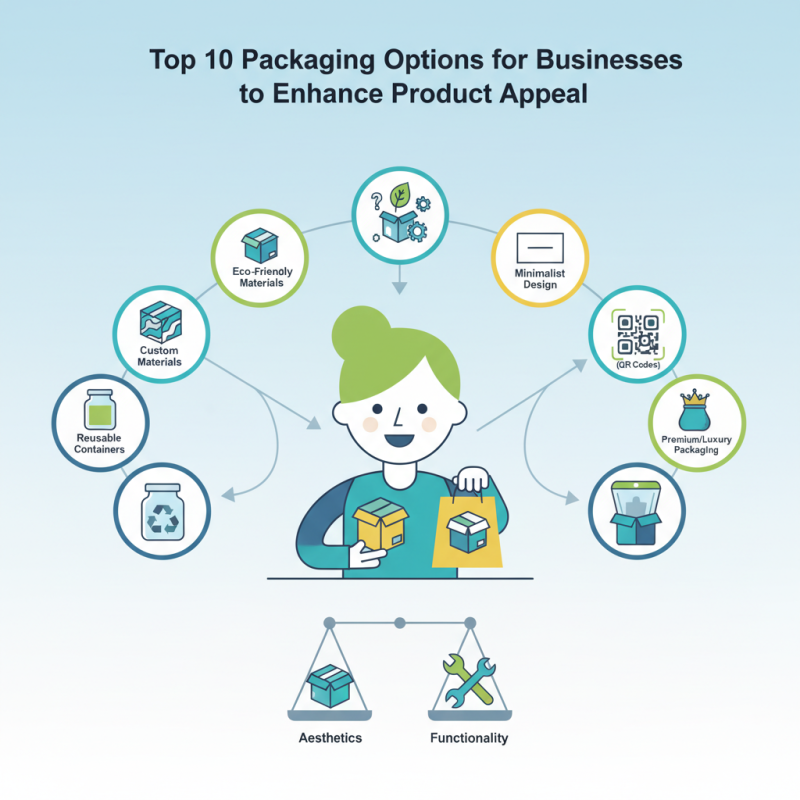
Top 10 Packaging Options for Businesses to Enhance Product Appeal
This chart illustrates the different packaging options and their perceived appeal among consumers. Packaging choices play a crucial role in attracting customers and enhancing product visibility.
Exploring Sustainable Packaging Solutions for Eco-Conscious Brands
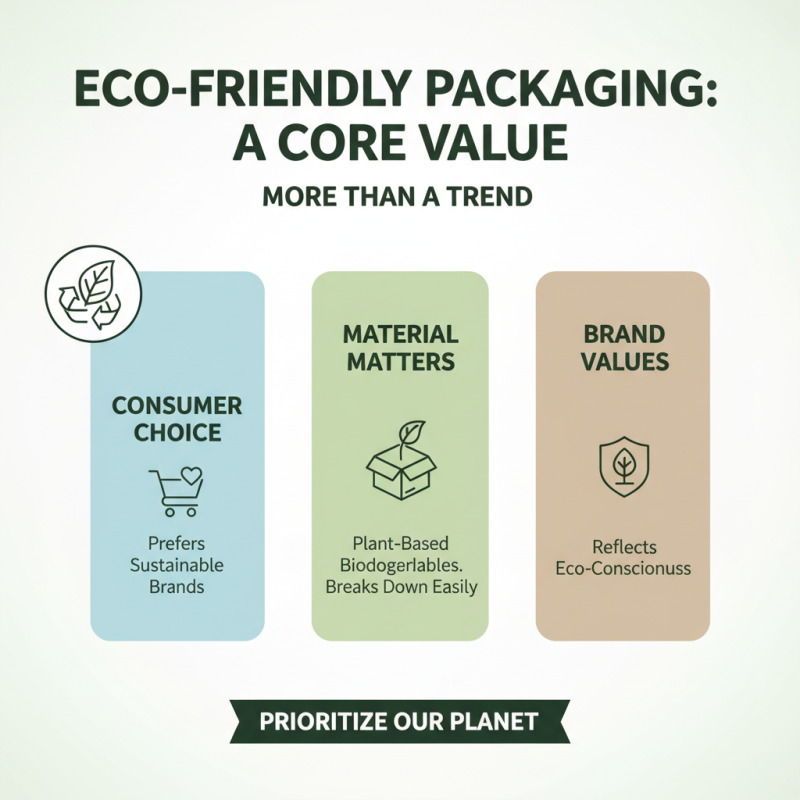
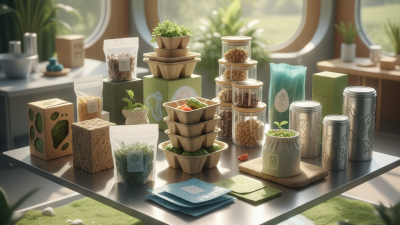
Sustainable packaging is more than a trend. It reflects the values of eco-conscious brands. With rising environmental concerns, consumers prefer brands that prioritize sustainability. Choosing the right materials is crucial. Biodegradable options made from plant-based substances are gaining traction. These materials break down more easily in the environment.
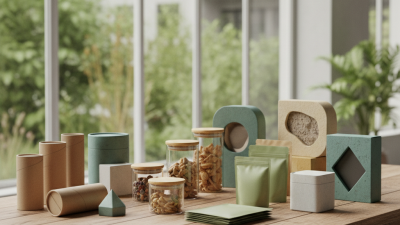
Recycled materials are also popular. They help reduce waste and lower the carbon footprint. For example, paper and cardboard made from recycled sources are good options. However, some brands struggle with maintaining product integrity while using sustainable materials.
Design plays a vital role. Simple designs with minimal packaging can reduce resource use. Transparent packaging can showcase the product and its sustainability claims effectively. Eco-friendly inks and dyes are essential, but not all brands use them. Consumers appreciate beauty, but they also value authenticity.
Innovative Design Trends in Packaging to Captivate Consumers
In today's competitive market, packaging plays a crucial role in attracting consumers. Innovative design trends can significantly enhance product appeal and create memorable experiences. One emerging trend is sustainable packaging. Using eco-friendly materials not only appeals to environmentally conscious shoppers but also reflects a brand's values. Many consumers appreciate brands that prioritize sustainability.
Another captivating trend is interactive packaging. Incorporating QR codes or augmented reality features allows consumers to engage with the product in a fun way. This interaction can create excitement and elevate the unboxing experience. Brands can connect with consumers on a personal level through storytelling and immersive experiences.
Tips: Ensure your packaging design reflects your brand identity. Consistency in branding fosters recognition. Experiment with unique shapes and textures to stand out. These elements can be memorable touchpoints. Yet, simplicity matters too. Overly complicated designs can confuse rather than attract. Reassess your packaging to align with what resonates best with your audience.
Utilizing Custom Packaging to Enhance Brand Identity and Recognition
Creating a unique brand identity is essential for any business.
Custom packaging plays a critical role in this process. It acts as a canvas for brands to express their individual styles.
Vibrant colors and distinct designs can captivate customers instantly.
Consider using textures or unique shapes to create a tactile experience. This could encourage customers to engage more deeply with the product.
Effective packaging should align with the brand's message. It can evoke emotions and tell a story.
For example, eco-friendly materials can signal a commitment to sustainability. This approach resonates with conscientious consumers.
However, it’s important to balance aesthetics and functionality. Sometimes, beautiful packaging may lack practicality.
If products are hard to open, customers may feel frustrated.
Striking the right balance is key.
Lastly, remember that packaging is not just visually appealing. It should enhance the unboxing experience.
Thoughtful details can make a significant difference.
A handwritten note or a small token inside could leave a lasting impression.
Enhancing brand recognition through custom packaging is a continuous journey.
Testing, feedback, and refining will always play a part. Each step teaches what resonates with customers.
Evaluating the Cost-Effectiveness of Various Packaging Options for Businesses
When assessing packaging options, cost-effectiveness is crucial for businesses. According to a report by Smithers Pira, packaging costs account for roughly 10% of the overall product cost. Businesses must balance quality and expense. Cheap packaging may attract customers initially, but it can lead to higher returns. Poor quality can harm brand reputation, ultimately costing more in the long run.
Sustainable packaging has gained significant traction. A 2021 study by McKinsey showed that 60% of consumers are willing to pay more for eco-friendly options. However, sustainable materials can often cost more upfront. Companies need to evaluate their target market and find a balance between sustainability and budget constraints. The challenge lies in choosing packaging that looks good while remaining cost-effective.
Packaging design also impacts consumer perception. A study by Packaging Strategies revealed that 37% of consumers cite packaging design as their first impression of a product. Investing in appealing designs may be worthwhile. But, if costs spiral, businesses could face financial strain. It’s a complex balance that requires careful thought, data, and perhaps a few experiments to find what works best.