Choosing the right packaging boxes involves more than selecting a size and printing a logo. The box must protect the product, control costs, support handling, and represent the brand clearly. A box that looks attractive may still crush during shipping. A strong box may waste materials and increase freight charges. Small decisions matter.
Ron Sasine, a packaging strategist and author, says, “Packaging is a system, not just a box.” This idea shapes the ten tips in this guide. Each recommendation considers product weight, dimensions, fragility, moisture exposure, storage conditions, and delivery distance. You will examine corrugated board strength, internal cushioning, closure methods, labeling space, and customer opening experience. A simple drop test can reveal weak corners. A rough measurement can expose expensive empty space.
Real packaging work is rarely perfect. A design may protect glass well but feel excessive for a lightweight item. A recyclable material may perform poorly in humid warehouses. Even experienced teams revise their first choice. That is normal. Good decisions come from testing, supplier discussions, and honest cost comparisons.
Packaging boxes should fit the product, not merely surround it. They should also fit your operation. Consider packing speed, pallet stability, return handling, and damage records. These details often remain invisible until something fails. The following tips provide a practical starting point for making better choices, while leaving room for testing, correction, and improvement.

Choosing the right packaging box begins with understanding the product inside. Measure its length, width, height, and weight accurately. Include fragile areas, handles, caps, or uneven shapes. A box that looks spacious may still allow damaging movement during delivery.
Tip 1: Define the product clearly. Is it heavy, delicate, oily, moisture-sensitive, or temperature-sensitive? Each feature affects the box material, thickness, inserts, and closure. From practical packing tests, a small empty space can cause repeated impact damage. However, excessive padding increases cost and storage needs. Finding the balance takes testing.
The packaging purpose matters just as much. A retail box may need strong shelf presence, while a shipping box must resist compression, vibration, and rough handling. Tip 2: List every requirement before choosing a structure. Consider stacking, opening, resealing, storage, labeling, and customer handling. Tip 3: Build a sample and test it with the real product. Check movement, corner protection, sealing strength, and opening comfort. Do not rely only on appearance.
Packaging decisions can be imperfect. A box may protect well but use more material than necessary. Another may look efficient but fail after several deliveries. Record test results, review damaged areas, and adjust the design. A practical specification should include dimensions, material performance, closure type, interior protection, and acceptable weight limits. Clear requirements make supplier discussions more accurate and quality checks more reliable.
Choosing the right packaging box starts with the product’s measured dimensions, not guesswork. Leave only enough clearance for protection and easy packing. Excess space increases movement, void fill, and shipping volume. The U.S. EPA reported 82.2 million tons of containers and packaging generated in 2018. Small design decisions can scale into significant material use.
Measure length, width, and height after adding protective components. Then test the box in real handling conditions. A long, narrow product may need a die-cut insert, while a heavy item usually needs stronger board and shorter spans. Select the structural design carefully: regular slotted cartons suit many shipments, but auto-lock bases can improve packing speed. A poor fit wastes labor.
Shape matters too. Square boxes stack efficiently, yet they may look excessive around slim products. Consider dimensional weight, pallet patterns, compression strength, and storage humidity. Smithers’ report, The Future of Corrugated Packaging to 2028, estimates the global corrugated market at roughly 205 billion dollars in 2023. That scale makes right-sizing a practical cost issue, not merely an aesthetic choice. I still see teams choosing stronger board when a better-fitting structure would solve the problem. That approach needs reconsideration. Test samples with vibration, drop, and compression trials. Laboratory results help, but warehouse reality can be less polite.
| Tip | Decision Area | Recommended Practice | Useful Measurement or Data | Structural and Performance Considerations |
|---|---|---|---|---|
| 1 | Measure the product accurately | Measure the product at its longest, widest, and tallest points, including handles, caps, protrusions, and removable parts. | Internal box size: product length + product width + product height, with clearance added to each dimension. | Use internal dimensions for product fit and external dimensions for storage, pallet planning, and transport calculations. |
| 2 | Choose the correct box size | Select the smallest practical box that protects the product without forcing it into the package. | A common starting point is 3–6 mm (about 1/8–1/4 in) of clearance per side for rigid products; fragile items may require more cushioning space. | Excess empty space increases material use and allows movement. A box that is too tight can create compression damage during handling. |
| 3 | Match the box shape to the product | Use rectangular cartons for efficient stacking and shaped or die-cut packs when product presentation or precise retention is important. | Rectangular cartons generally provide more predictable pallet utilization than irregular shapes because their footprint is easier to tessellate. | Irregular shapes can improve shelf appeal but may reduce stacking efficiency and require additional protective inserts or custom tooling. |
| 4 | Select an appropriate board type | Choose folding carton paperboard for lightweight retail products and corrugated board for shipping, stacking, or heavier products. | Typical paperboard calipers are approximately 0.3–0.8 mm; corrugated board commonly ranges from approximately 1.5–7 mm, depending on flute construction. | Board thickness, flute profile, liner quality, and box dimensions all affect compression strength and cushioning performance. |
| 5 | Consider product weight and compression | Choose a board grade that supports the packed product during stacking, storage, and transportation. | Record the packed gross weight in kg or lb and identify the expected stack height, storage duration, and environmental conditions. | Compression strength decreases when paper-based packaging is exposed to high humidity, repeated handling, or long-term stacking loads. |
| 6 | Plan protective inserts and cushioning | Use partitions, molded pulp, paper pads, foam, or corrugated inserts to prevent impact, abrasion, and product-to-product contact. | Define the required clearance between the product and box wall based on product fragility, drop risk, and cushioning material performance. | Inserts should hold the product in position without applying damaging pressure to sensitive surfaces, corners, screens, closures, or labels. |
| 7 | Select the right closure style | Choose tuck flaps for retail presentation, adhesive or crash-lock bases for quick assembly, and stitched or taped closures for demanding shipments. | Specify whether the package requires manual assembly, automated packing, tamper evidence, repeated opening, or permanent closure. | The closure must remain secure under vibration and compression while still meeting the intended opening experience and production speed. |
| 8 | Optimize shipping efficiency | Compare the packed box dimensions and weight with carrier rules, pallet patterns, warehouse locations, and delivery requirements. | Dimensional weight: length × width × height ÷ 5,000 when using centimetres, or ÷ 139 when using inches; carrier rules may differ. | Reducing unnecessary height or void space can lower transport volume, but the package must still provide adequate product protection. |
| 9 | Design for handling and storage | Use flat, stable panels, reinforced corners, and compatible footprints for warehouse shelving, palletizing, and manual handling. | Common pallet footprints include 1,200 × 800 mm and 1,200 × 1,000 mm; confirm the footprint used in the target distribution network. | Keep the center of gravity stable and avoid box proportions that are excessively tall, narrow, or prone to tipping during movement. |
| 10 | Prototype and test before production | Produce physical samples and test fit, assembly, stacking, vibration, compression, and drop performance before approving the final structure. | Test conditions should reflect the actual distribution cycle, including packed weight, handling orientation, storage duration, and expected shipping environment. | Revise the dimensions, inserts, board grade, or closure after testing. A structurally efficient box is one that protects the product with minimal material and avoidable empty space. |
Choosing the right box starts with the product, not the catalogue. Measure the item, add cushioning space, and avoid oversized cartons that waste material. Corrugated board suits most shipments because its fluted structure absorbs impacts without excessive weight. For heavier goods, compare flute profiles, board grades, and double-wall construction. Test filled boxes using ISTA or ASTM procedures, including drops, vibration, compression, and humidity. A box that looks strong can still fail at a wet loading dock.
Sustainability needs careful comparison. The U.S. Environmental Protection Agency reported a 68.2% recycling rate for paper and paperboard packaging in 2018. Paper-based boxes also support easier fiber recovery when coatings, adhesives, and mixed materials are limited. Recycled content matters, but it may reduce stiffness in demanding conditions. Plastic-based alternatives can resist moisture, yet the OECD reported that only 9% of global plastic waste was recycled in 2019. Consider right-sizing, recycled fiber, water-based inks, and minimal inserts. Ask suppliers for fiber content, testing records, and credible chain-of-custody evidence. Measure damage rates after launch. Lower material use is not sustainable if replacement shipments increase. No box wins every test. I have seen teams over-specify packaging, then discover that transport damage came from poor internal fit. That judgment deserves review.
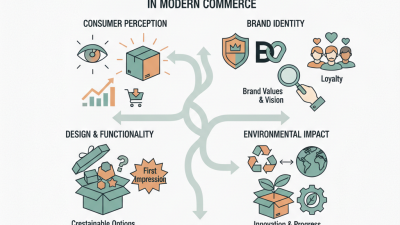
Choosing the right packaging box starts with the customer’s first visual contact. Research from Smithers forecasts the global corrugated packaging market will exceed 200 billion dollars by 2029. That growth reflects practical demand, but appearance still matters. Use one clear logo position, readable type, and colors that match the product’s purpose. Avoid crowded artwork. A box should communicate within seconds.
Printing quality affects perceived value. The Paper and Packaging Board reports that 72% of consumers say packaging design can influence purchasing decisions. This makes color accuracy, sharp edges, and consistent finishes important. Test printed samples under store lighting and daylight. A dark blue may look premium on screen, yet appear nearly black on cardboard. Small errors become obvious near the customer’s hands.
Customer experience extends beyond the shelf. According to the 2024 DHL E-Commerce Trends Report, 70% of shoppers consider sustainability when purchasing online. Choose right-sized boxes, practical opening features, and recyclable materials where local systems support them. Include a clean interior, not excessive filler. Keep the unboxing moment simple. A beautiful box can still fail if it arrives crushed or wastes space. I would not treat every premium finish as necessary; matte coating may improve touch, but it can also reduce recyclability and increase cost. Test durability, print clarity, opening effort, and disposal instructions with real users before approving production.
10 Tips for Choosing the Right Packaging Boxes
Cost should include more than the quoted unit price. Compare board grade, printing, inserts, freight, storage, and setup fees. A cheaper box can increase damage claims. Check minimum order quantities and payment terms carefully. Ask suppliers about lead times during busy seasons. Request samples from actual production materials, not only digital drawings. Review their quality records, traceability, and inspection process. A reliable supplier should answer specific questions clearly.
Test each sample under realistic conditions. Fill it with the intended product, then stack it for several days. Measure compression, corner strength, vibration, and drop resistance. Test humidity if shipments may pass through wet warehouses. Watch for crushed edges, loose closures, and shifting contents. Small failures matter. I once approved a box after a clean drop test, but ignored repeated opening and closing. That mistake exposed a weak flap during packing.
Practical performance also affects labor. A box should fold quickly, seal consistently, and fit shelves without wasted space. Ask packers to trial it on a normal shift. Record packing time and rejected units. Compare protection with material use, not appearance alone. Heavier packaging may reduce damage but raise freight costs. Lighter packaging may save money and fail in transit. Review supplier samples, test results, and production consistency before committing. Keep one approved sample for future comparison, because specifications can drift quietly.
Review costs, suppliers, testing, and practical performance through common corrugated board strength grades.
Edge Crush Test (ECT) measures the stacking strength of corrugated board in pounds per linear inch. Higher ECT grades generally provide better resistance to compression, but they may increase material and shipping costs. Confirm the required grade with your supplier and validate it through product-specific compression and transit testing.