Choosing poly packaging for global shipping in 2026 requires more than comparing prices or film thickness. A parcel may face rain in Singapore, freezing temperatures in Canada, and rough conveyor handling in Germany. The right package must protect products while meeting changing sustainability expectations.
The OECD’s Global Plastics Outlook reports that global plastic waste could nearly triple by 2060 without stronger intervention. Packaging remains a major contributor. Smithers’ flexible packaging research also identifies continued growth in lightweight films, recycled content, and high-performance barrier structures. These trends matter for exporters. A thinner mailer can reduce material use, but weak seals may increase damage, returns, and waste.
Packaging strategist David Luttenberger offers a useful principle: “Packaging is a system, not a single material.” That system includes film structure, seal strength, closure design, labeling, storage, and transport conditions. It also includes recyclability claims and documentation. Small details matter.
Experience often exposes the gap between laboratory results and real shipments. A poly bag that survives a drop test may still fail after forty days in humid transit. A recycled film may look responsible, yet perform poorly around sharp edges. There is no perfect answer.
This guide examines film type, thickness, barrier performance, closure options, recycled content, and destination requirements. It also considers recognized testing methods and supplier evidence. Readers should verify current rules with local authorities and carriers, because requirements change. Reliable decisions need data, not attractive claims.
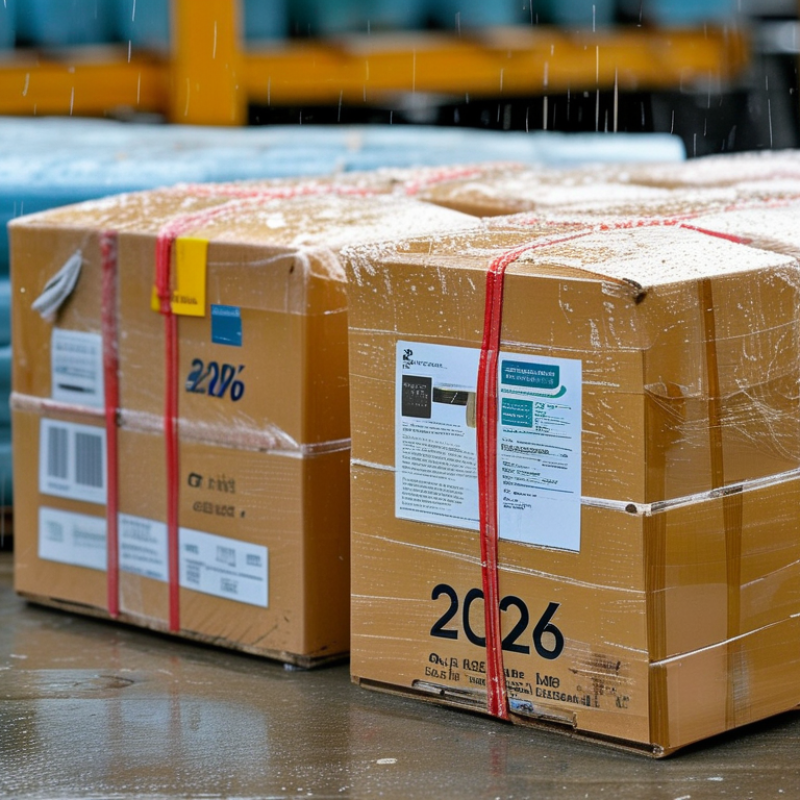
Global parcel networks are becoming harsher and more crowded. The International Post Corporation reports continued growth in cross-border e-commerce shipments, while the World Bank’s 2023 Logistics Performance Index stresses reliability as a major supply-chain challenge. Poly packaging must handle drops, vibration, compression, moisture, and rough manual handling.
ISTA 3A helps model parcel-delivery hazards, including atmospheric conditioning, shock, vibration, and compression. ASTM D4169 provides broader distribution-cycle options and assurance levels. Choose the profile from real route details, not convenience.
A long air route needs different conditioning from a short road shipment. Test the actual poly mailer, seal, label, and product combination. Measure punctures, seam separation, film tears, and moisture entry. A passing result can still hide weak corners or poor closure technique.
Tips:
Map the worst route first. Use ISTA 3A for parcel risks, then review ASTM D4169 cycles for broader distribution planning. Record product weight, dimensions, stacking exposure, and temperature ranges. Repeat tests after material changes.
Do not assume thicker film always performs better. OECD’s Global Plastics Outlook identifies packaging as roughly 40% of global plastics demand and about half of plastic waste. That figure deserves attention. Reducing excess material matters, but under-design creates returns, damage, and waste.
The uncomfortable part is this: laboratory results can look precise while real handling remains unpredictable. Review failures honestly, and test again.
Poly film gauge should come from test data, not guesswork. ASTM D1709 measures impact resistance using a falling dart. It helps estimate how film handles sharp corners, drops, and rough container movement. ISO 527 measures tensile strength and elongation. These values show how the film stretches before tearing during wrapping, sealing, or handling.
Test film samples at the expected shipment temperature and humidity. A film that performs well in a warm laboratory may become less flexible in a cold warehouse. Compare machine direction and transverse direction results. Weakness can hide in one direction. Record gauge, conditioning time, specimen preparation, and test method. Small differences can change the purchasing decision.
Choose a gauge that matches the real risk. Higher D1709 impact values may support thinner film, while stronger ISO 527 results can improve load retention. However, strength alone does not prevent punctures. A 60-micron film may work for smooth cartons but fail around exposed edges. Add corner protection or increase gauge when transit trials show tears. Recheck actual parcels after testing. Lab data guides the choice, but field evidence can disagree. A neat spreadsheet is not enough.
How to Choose Poly Packaging for Global Shipping in 2026?
Poly packaging should match the product’s actual sensitivity, not just its appearance. ASTM F1249 measures water vapor transmission rate, or WVTR, through the film. ASTM F1927 measures oxygen transmission rate, or OTR, under controlled conditions. Lower values usually indicate stronger barrier protection. However, testing temperature and relative humidity can change the results significantly.
A moisture-sensitive powder may need low WVTR during humid ocean transport. An oxygen-sensitive component may require low OTR during long storage. Ask for test conditions, film thickness, sealing method, and test direction. A result without this information is incomplete. It may look impressive, yet fail in a hot container. Packaging teams should also examine seal strength, puncture resistance, and shipment vibration. Barrier performance cannot repair a damaged seal. I have seen specifications focus heavily on film values while ignoring actual handling risks.
Tips: Compare WVTR and OTR results at conditions resembling the route. Review both dry and humid scenarios. Run filled-package trials before approving a large order. Keep samples after testing. They reveal practical failures that laboratory numbers may miss. Do not assume the lowest value is always the best choice. It may increase cost, stiffness, or sealing difficulty. Recheck the decision when product formulation, destination, or storage time changes.
| Poly Packaging Structure | Typical Thickness (µm) |
ASTM F1249 WVTR (g/m²/day) |
ASTM F1927 OTR (cm³/m²/day) |
Moisture Barrier | Oxygen Barrier | Typical Global-Shipping Use |
|---|---|---|---|---|---|---|
| Low-density polyethylene (LDPE) film | 50–100 | 0.4–1.5 | 1,500–4,000 | Low to moderate | Low | Short-distance transit, secondary overbags, and products that are not moisture- or oxygen-sensitive. |
| Linear low-density polyethylene (LLDPE) film | 60–120 | 0.3–1.2 | 1,300–3,500 | Low to moderate | Low | Durable pouches and liners where puncture resistance is more important than high barrier. |
| Oriented nylon/polyethylene (PA/PE) laminate | 80–150 | 1.0–4.0 | 20–80 | Moderate | Moderate to good | Vacuum-packed or mechanically demanding products requiring toughness and improved oxygen control. |
| Polyester/polyethylene (PET/PE) laminate | 80–150 | 0.8–2.5 | 40–120 | Moderate | Moderate | General export pouches needing printability, dimensional stability, and better protection than mono-PE film. |
| EVOH-containing coextruded PE film | 70–150 | 0.3–1.5 | 0.1–5 | Good | Very good when dry | Oxygen-sensitive dry goods and modified-atmosphere packs; performance can decline at high humidity. |
| Metallized polyester/polyethylene laminate | 70–130 | 0.05–0.5 | 0.05–2 | Very good | Very good | Long ocean or air shipments for aroma-sensitive, oxidation-sensitive, or moisture-sensitive products. |
| Aluminum foil/polyethylene laminate | 90–180 | <0.01 | <0.01 | Exceptional | Exceptional | Maximum-barrier export packaging for highly sensitive products and extended shelf-life requirements. |
| Coated or ceramic-barrier PET/PE laminate | 80–150 | 0.05–0.5 | 0.1–5 | Very good | Very good | High-barrier applications requiring a transparent package or improved resistance to flex cracking. |
Choosing poly packaging for global shipping in 2026 starts with dimensional rules, not appearance. A light mailer can still become expensive when its measured length, width, or thickness exceeds a carrier’s parcel limits. Many networks calculate dimensional weight by multiplying package dimensions, then dividing by a published factor. Those factors and maximums vary by country, service, and route. Check the 2026 tariff before ordering stock.
Measure the filled mailer, not the empty one. Leave enough room for a folded garment, but remove excess air around small products. A 30 × 22 × 5 cm mailer may fit a product well; a 30 × 22 × 9 cm version can cross a thickness threshold. That difference is easy to miss. It can also trigger manual handling or a higher price. The Pitney Bowes Parcel Shipping Index 2024 recorded 161.1 billion parcels worldwide in 2023, showing how small packaging decisions scale across busy networks.
Use a sample pack for compression, seam strength, and label placement. Then test it through your highest-volume routes. The International Post Corporation’s Global Postal Industry Report 2024 highlights continuing parcel-network pressure and changing delivery patterns. Treat published limits as working controls, not permanent facts. Recheck them during 2026 planning. I once saw a mailer pass a warehouse test but fail after winter clothing was packed tightly. That was a useful warning. Packaging trials need real contents, realistic pressure, and measured dimensions.
Choosing poly packaging for global shipping in 2026 requires more than checking its resin code. Confirm the film structure, sealant, inks, adhesives, and labels with current supplier documentation. A package may look recyclable but fail sorting or reprocessing tests. That difference matters.
Use APR guidance as a practical design reference for plastic packaging. It can help assess whether a polyethylene film, closure, label, or additive supports recycling in North American systems. Check the complete package, not only the main film. Dark pigments, heavy coatings, incompatible adhesives, and attached non-polymer parts may reduce recovery. Keep the structure as simple as possible. Simple often works better.
EN 13430 provides a European framework for packaging recoverable through material recycling. Review the package against material identification, collection, sorting, and recycling conditions. Evidence should include test results, technical specifications, and information about the intended market. A supplier statement alone may be incomplete. Ask how the package performs in actual local facilities. Recyclability is not the same as recycled content, either. That confusion remains common. Also, an APR-aligned design may not automatically satisfy every European assessment. Regional infrastructure changes the answer. I would document both evaluations before approving a shipping format, while admitting one limitation: recycling claims can become outdated when collection systems change.