Choosing the best bubble packaging suppliers in China takes more than comparing quoted prices. Buyers need to check bubble consistency, film thickness, roll length, sealing quality, customization options, and shipping reliability. A sample roll may look sturdy under warehouse lights, yet split when wrapped around a sharp carton corner. Small tests matter.
Demand is growing alongside online retail. The U.S. Census Bureau reported that U.S. e-commerce sales reached an estimated $1.1926 trillion in 2024, up 8.1% from 2023 and equal to 16.1% of total retail sales. That figure is not a global packaging forecast, but it shows why dependable protective materials remain important to many sellers. For procurement teams, the practical question is whether a supplier can deliver consistent products at scale, with clear specifications and responsive quality control.
Sustainability deserves scrutiny, too. The Ellen MacArthur Foundation describes a circular economy as “restorative and regenerative by design.” That principle invites buyers to ask about recycled content, material reduction, and end-of-life options—not just marketing claims. Evidence matters.
This guide compares Chinese suppliers through product range, manufacturing capability, customization, quality processes, and communication. No single supplier fits every shipment. And a polished catalog is not proof of performance. Use the shortlist as a starting point, request current technical documents, and test samples under real packing conditions before placing a large order.
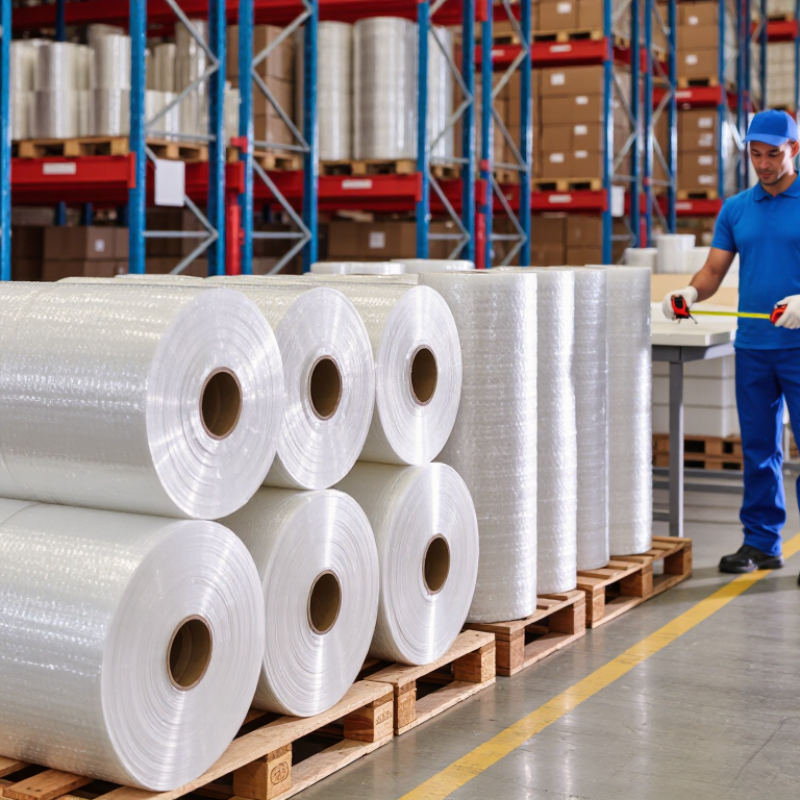
Bubble packaging is usually made from polyethylene (PE) film, but film grade and thickness affect puncture resistance and flexibility. PlasticsEurope’s Plastics – the Fast Facts 2023 reports 400.3 million tonnes of plastics production in 2022; LDPE/LLDPE and HDPE/MDPE together accounted for roughly one-quarter. That scale explains PE’s availability, not a package’s protective performance. Ask suppliers for film thickness, recycled-content details, and test results. Small differences matter.
Bubble diameter is only one part of cushioning. Common options include bubbles around 10 mm and 25 mm across, though dimensions vary by supplier. Smaller bubbles suit tight wrapping; larger ones can provide more stand-off around heavier items. But diameter alone misleads. Bubble height, film thickness, seal strength, and the number of layers all affect impact protection. A two-layer sheet is common; a laminated structure may add a tougher outer face. ASTM D1596 describes dynamic cushioning tests, so request test data for the packed product and its shipping conditions. I still check the actual sample: a neat specification sheet cannot show whether bubbles flatten too easily under a corner load.
Film thickness, roll width, and material grade determine whether bubble packaging protects a product efficiently. Compare thickness in microns, not vague terms such as “heavy duty.” A 50 µm film may suit light parcels, while heavier or sharp-edged items often need a thicker structure. Actual performance also depends on bubble size and film construction. Small details matter.
Check roll width against the items and packing equipment. A roll that is too narrow can leave corners exposed; an oversized roll may create waste and slow packing. Ask suppliers for the usable width, thickness tolerance, material composition, and a current specification sheet. For material grade, confirm whether the film uses LDPE, a blend, or recycled content. These differences can affect clarity, flexibility, and consistency between batches.
Tips: Request a sample roll before placing a large order. Wrap a real product, press the sealed edges, and check for popped bubbles after handling. Test it first. Compare samples under the same conditions, and record the results. Supplier figures help, but I would not treat one successful test as proof that every future batch will perform identically.
For bubble packaging suppliers in China, request ASTM D882 tensile-strength results in MPa and ASTM D1709 dart-impact results in grams. D882 measures how a plastic film responds to pulling; D1709 measures the energy needed for a falling dart to puncture it. Higher readings can indicate stronger material, but they do not guarantee better cushioning. Film thickness, sample conditioning, and test method matter. Compare like with like.
The Flexible Packaging Association’s 2024 State of the Flexible Packaging Industry report puts U.S. industry sales at about $42.5 billion in 2023. That figure shows the scale of flexible packaging, not the quality of any individual bubble film. Ask suppliers for dated lab reports, sample thickness, test method, and batch identification. A single result is not enough. One caveat: ASTM results cannot fully predict performance after repeated compression or rough handling.
Tips: Request tests from the same lab and compare matching film thicknesses. Check whether D1709 uses Method A or B; results may differ. Inspect sample bubbles for uneven seams and weak spots. If a supplier shares only a headline number, ask for the full test conditions.
China’s bubble-packaging suppliers generally fall into three groups: bubble-film manufacturers, converters, and exporters. Each fits a different purchasing need. Manufacturers make film and control roll width, thickness, and bubble size. They may suit buyers seeking steady volume or custom specifications. Request sample rolls and a technical data sheet; a glossy surface alone does not prove cushioning performance. Capacity and lead times can shift, so confirm both before ordering.
Converters turn standard film into practical formats, such as perforated sheets, small rolls, or custom-cut pieces. They can reduce packing time, especially when a warehouse handles many parcel sizes. Exporters focus on sourcing, documentation, and shipping coordination. Some also inspect products before dispatch, but their quality checks may differ. Ask who makes the film and who handles claims if a batch arrives damaged. The supply chain is not always obvious.
Tips: Compare samples using the same parcel and drop height. Check roll length, thickness, seal quality, and packaging condition. Request recent inspection records when available. Small sample differences matter. Do not rely on a single quote; specifications may not match.
| Supplier Type | Main Role | Typical Products or Services | Best Suited For | What Buyers Should Check |
|---|---|---|---|---|
| Bubble-Film Manufacturer | Produces bubble film from plastic resin using film-extrusion and bubble-forming equipment. | Standard or custom-width bubble rolls; options may include different bubble sizes, film thicknesses, and single- or double-layer constructions. | Buyers needing bulk rolls, ongoing supply, or closer control over film specifications. | Request film specifications, samples, production capacity, quality-control procedures, and confirmation that the supplier manufactures the film in-house. |
| Packaging Converter | Processes film into packaging formats or combines it with other materials to meet application requirements. | Cut-to-size sheets, bags, sleeves, and laminated or otherwise customized packaging, depending on equipment and capability. | Buyers who need ready-to-use formats, converting work, or packaging tailored to specific products. | Confirm dimensions, seals or closures, material construction, tolerances, sample approval, and whether converting is done in-house or subcontracted. |
| Exporter or Trading Supplier | Coordinates product sourcing and international sales; may work with one or more factories rather than manufacture the packaging itself. | Supplier coordination, export documentation, order communication, and shipping arrangements; product range depends on its manufacturing partners. | Buyers who value export coordination or want to source multiple packaging items through one supplier. | Ask who manufactures the goods, how specifications and inspections are controlled, which export documents are available, and who handles claims or production changes. |
| Integrated Manufacturer and Converter | Combines film production with downstream cutting, bag-making, or other converting operations. | Bubble film supplied in rolls as well as selected converted formats, subject to the supplier’s machinery and production scope. | Buyers seeking a single production source for both film and finished packaging formats. | Verify which processes are performed at the same facility, review samples from each production stage, and confirm that the quotation covers the full specification. |
Capabilities, minimum order quantities, lead times, and export services vary by supplier and order specification. Confirm current details directly and approve a production sample before placing a large order.
The best bubble packaging suppliers in China are not always the largest; they are the ones whose minimum order quantity (MOQ), lead time, and quality records fit your shipment. Ask for separate MOQs for stock rolls and custom sizes, plus a written schedule covering samples, production, and dispatch. A low quote means little if a 1.2-meter roll arrives late or has uneven bubble height. Request a pre-production sample and confirm thickness, roll width, and seal strength against your specification.
Quality control should include batch inspection records and agreed tests, such as drop testing using a relevant procedure from the ASTM D5276 standard. Check that ISO 9001 certificates are current and issued to the actual manufacturing site; verify scope and expiry dates. OECD’s 2022 Global Plastics Outlook estimates that 353 million tonnes of plastic waste were generated in 2019, with only 9% ultimately recycled. This makes material composition and recycled-content claims worth checking with supporting documentation. One easy-to-miss risk: a certificate may belong to a trading office, not the factory. Verify it.
Tips: Compare suppliers with the same sample size, specifications, and delivery terms. Ask for the latest inspection report. Small runs matter. And allow buffer time; production schedules can slip.